Your Money Is No Longer Yours. Get Used to It.
Published:
Financial freedom—according to the NBU schedule.
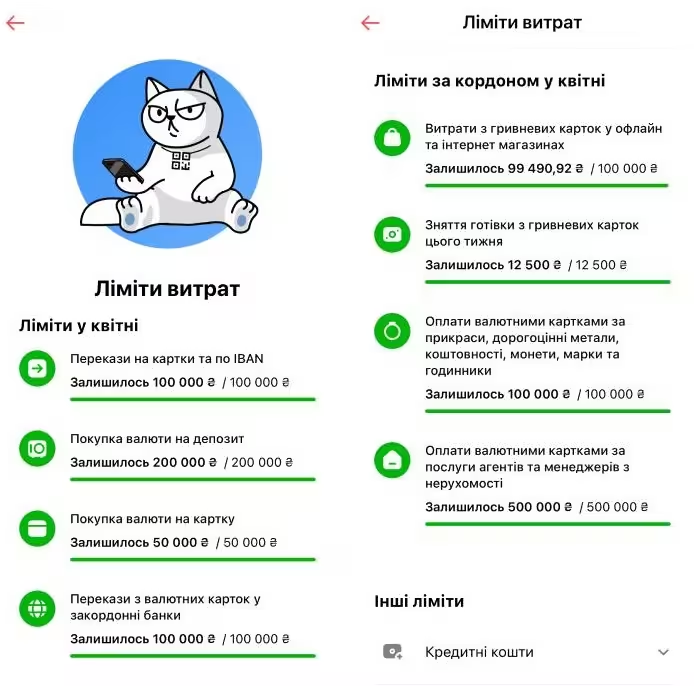
People like to talk about private property in elaborate terms, but the essence is simpler: if you can't spend your money as you wish, it's not really your money anymore.
In Ukraine, this game has long stopped being theoretical.
The National Bank says it plainly: restrictions are needed for "stability" and "control." Sounds convincing—until you hit the limit yourself.
Didn't break the law? Doesn't matter.
Money is clean? Here's your limit, sir.
Need it urgently? No problem—just sit and wait.
This is where economics ends—and pure conditioning begins.
If rules are set in advance, that's regulation. But when they decide how you can use your own property, that's access administration. And not because you're bad—it's just how the system works.
A convenient mantra for all times: "It's temporary."
But no one specifies: temporary until what year? No dates, no conditions. Just "as long as necessary." And suddenly, the regime becomes the norm.
Once, the question was direct: why can't I manage my own money? Now it's more mundane: how much is allowed today? Seems trivial, but now you're no longer the owner—just a temporary user with an access card.
The state doesn't take anything away—it simply claims the right to decide how you use your money. All civilized, all for the system. And it works precisely because it looks reasonable.
But if you strip away the pretense, it's simple: your money is yours—right up until you try to use it. Then come the rules, and it's clear who really owns it.

Max Sharp
Author